Why Kids Quit Guitar Practice — And How to Make It Fun Again
If you've ever struggled to stay consistent with guitar practice, or you've got a child learning guitar and you're constantly reminding them to practise, you're definitely not alone.
One of the biggest challenges with learning guitar isn't talent.
It's consistency.
Most kids — and adults too — don't stop learning guitar because they can't do it. They usually stop because practice doesn't feel rewarding. It starts to feel confusing, repetitive, or like another chore on the weekly list.
The good news is, this can be fixed with a simple practice system that helps kids see their progress and enjoy small wins along the way.
Why Kids Struggle to Practise Guitar
Here's what usually happens.
A child starts guitar lessons full of excitement. They get their guitar, learn a few notes or chords, and feel motivated at the beginning.
But then they sit down to practise at home and suddenly they're not sure what to work on.
There's no clear goal.
There's no obvious progress.
And after a few practice sessions, motivation starts to drop.
That's when many kids begin to lose interest.
Parents often respond by reminding them to practise more, but this can sometimes make guitar feel like homework. And once guitar starts to feel like pressure, kids can quickly disconnect from it.
The Real Problem Isn't Discipline
A lot of parents think their child needs more discipline to practise guitar.
But in most cases, the better solution is not more pressure.
The better solution is a simple system that makes practice feel like progress.
Kids respond well to:
Small wins
Fun challenges
Visible progress
Encouragement
Simple routines
When kids can actually see that they are improving, they're far more likely to keep going.
Make Guitar Practice Visible
One of the simplest ways to help a child stay motivated is to make their practice visible.
That means tracking it somewhere they can see it.
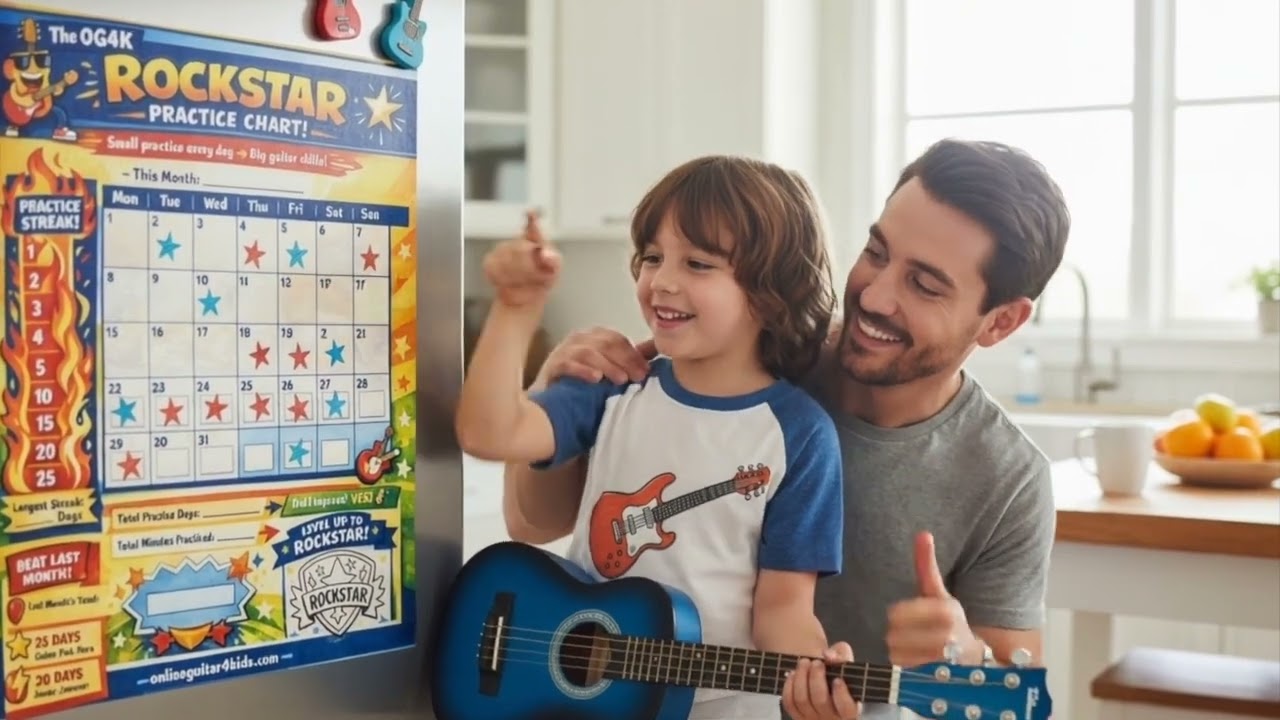
This could be as simple as a printed practice chart on the fridge, bedroom wall, or music stand.
Each day they practise, they can:
Tick off the day
Add a sticker
Write down their practice time
Colour in a box
Mark a small achievement
This turns practice into something they can see, feel proud of, and build on.
Use a Rockstar Practice Chart
For kids learning guitar, we use what we call a Rockstar Practice Chart.
The idea is simple.
Every time your child practises, they mark it on the chart. Over time, they start building a streak.
Instead of practice feeling random, it becomes a game.
Instead of relying on motivation, they start building momentum.
And momentum is powerful.
A child who sees five ticks in a row on their practice chart often wants to keep the streak going. That small visual reward can make a big difference.
Why Practice Charts Work for Kids
A guitar practice chart works because it gives kids instant feedback.
Learning guitar can feel slow at times. Some skills take weeks or months to develop. That can be hard for a child to understand.
But a practice chart gives them something immediate.
They can see:
"I practised today."
"I'm building a streak."
"I'm getting better."
"I'm sticking with it."
That sense of progress helps them feel successful, even before they've mastered the next song or chord.
Keep Guitar Practice Simple
A good practice routine for kids doesn't need to be complicated.
In fact, the simpler it is, the better.
Instead of saying, "Go and practise guitar," give your child a clear mini-goal.
For example:
Practise for 5 minutes
Play one chord 10 times
Practise one song section
Clap one rhythm
Play along with the teacher video
Review one thing from the lesson
Small goals are much easier for kids to complete.
And completed goals build confidence.
Focus on Small Wins
One of the biggest mistakes parents can make is expecting too much too soon.
Guitar is a skill that builds gradually.
At the start, a small win might be:
Holding the guitar correctly
Remembering one chord
Playing a short rhythm
Keeping a steady beat
Practising three days in a week
Playing without giving up
These little wins matter.
They help kids feel capable.
And when a child feels capable, they're much more likely to keep learning.
How Parents Can Help Without Nagging
If you're a parent, your role is not to force practice.
Your role is to help create the environment where practice feels easy to start.
Try this:
Put the guitar somewhere visible and easy to reach.
Keep the practice chart somewhere your child can see it.
Celebrate the effort, not just the result.
Instead of saying, "You need to practise," try saying:
"Let's see if you can get another tick on your Rockstar Chart today."
That small change makes practice feel more like a challenge and less like a chore.
The Best Guitar Practice Routine for Kids
A simple routine might look like this:
Step 1: Tune the guitar
Step 2: Warm up with an easy exercise
Step 3: Practise one skill from the lesson
Step 4: Play part of a song
Step 5: Mark the Rockstar Practice Chart
That's it.
It doesn't need to be long. It just needs to be consistent.
For many beginners, 5 to 10 minutes of focused practice is a great starting point.
Final Thoughts
If your child is struggling to practise guitar, it doesn't mean they're lazy or not musical.
They may just need a clearer system.
A simple practice chart can help make guitar practice more fun, more visible, and more rewarding.
When kids can track their progress, celebrate small wins, and build momentum, they're much more likely to stick with guitar long term.
Download the Free Rockstar Practice Chart
I've created a free Rockstar Practice Chart you can use at home to help your child stay motivated with guitar practice.
Download it here: https://onlineguitar4kids.com/free-lesson
And if you'd like help getting your child started the right way, you can learn more about our online guitar lessons for kids here:


